
Disney Trip Planning: Top Disneyland & Orlando Park Hacks
Planning a trip to Disney or Universal Orlando? Yeah, it can feel like a lot—tickets, hotels, figuring out park strategy, deciding what to wear, and, of course, dodging those endless lines. It’s a lot to juggle, but with some insider tips, you can actually enjoy the process instead of stressing over every detail.
The secret to a great theme park trip? Have a game plan before you even step through the gates. Know the best times to visit, how to handle the crowds, and which rides are worth your time.
Whether it’s Disneyland in California or the Orlando parks, stuff like using early entry options and booking meals ahead can save you hours. Even the little things—like your outfit or hotel location—end up making a surprising difference.
This guide digs into everything from snagging discount tickets to picking the right hotel. Need outfit ideas for Universal Studios? We’ve got you. Want to tackle both Disney and Universal in one whirlwind trip? There’s a way. You’ll get the scoop on crowd calendars, smart itineraries, and a few rookie mistakes to avoid.
Key Takeaways
- Plan your visit using crowd calendars and get there early for extra park time at both Disney and Universal.
- Book tickets and hotels ahead of time for the best deals, and maybe splurge on staying on-site for perks like Express Pass or bonus park hours.
- Sketch out a flexible daily plan that hits your must-do attractions, and use tricks like rope drop and park hopping to stay ahead of the crowds.
Essential Timing Strategies for Disney and Universal Visits
Picking the right time to visit really does matter. You can save hours in line and a ton of money on tickets and hotels just by timing it right.
Crowd levels, special events, and weather? They all play a part in how your trip shakes out.
Understanding Crowd Calendars and Best Travel Windows
A crowd calendar shows you how busy the parks will be, day by day. These are gold for finding the least chaotic days at Disneyland and Universal Studios.
For Disneyland, mid-January through early March and mid-September through mid-November are usually your best bets. These times fall between big holidays and school breaks, so weekdays are especially mellow.
If you can, avoid spring break, summer, and major holidays. Presidents’ Day weekend, Easter week, and the days between Christmas and New Year’s are just packed.
Universal Orlando follows a similar pattern. January and September? Practically a secret weapon for short waits.
Anaheim Convention Center events can mess with your plans. Check their schedule before you book, because big conventions bring in thousands who might hit the parks too.
Touring Plans has detailed crowd calendars (about $25 a year) that break down which parks to hit on which days. Honestly, if you’re a planner, it’s worth it.
Major Seasonal Events and Their Impact
Special events change everything. Halloween Time at Disneyland stretches from late August through October, with themed decorations and food everywhere.
Oogie Boogie Bash is its own ticketed party, and on those nights, regular guests get kicked out early. Not ideal if you want a full day.
Christmas at Disneyland starts mid-November and runs through early January. The holiday stuff is amazing, but crowds? Yeah, they’re wild.
Plaza de la Familia at Disney California Adventure brings Día de los Muertos celebrations, which is a cool cultural experience and doesn’t require a separate ticket.
Universal Orlando’s Halloween Horror Nights run September through early November. Regular guests have to leave early, and hotel prices shoot up during these weeks.
If you’re after the event experience, plan around them. If not, steer clear for lower crowds and longer park hours.
Weather Considerations for Trip Optimization
Anaheim has pretty mild weather—think 60-85°F most of the year. Summers are sunny and dry, but winter can bring a few rainy days and chilly mornings.
January and February are the coolest months, so if you hate the heat, that’s your window. Bring a light jacket for those early mornings and late nights.
Orlando is a different beast. Summer is hot and sticky, with daily afternoon thunderstorms from June to September. Thankfully, the storms usually pass quickly.
November through April is the sweet spot for Universal Orlando: 60-80°F and way less humidity. Less rain, too.
Pack layers for both spots. Mornings can be 20 degrees cooler than afternoons. And honestly, just toss a poncho or rain jacket in your bag—rain can hit any time.
How to Score the Best Tickets and Reservations
Getting tickets and making reservations is all about planning ahead. Multi-day tickets are almost always a better deal, and booking early can save you some real cash.
Discounted and Multi-Day Tickets
Multi-day tickets drop your cost per day compared to single-day tickets at both Disneyland and Universal Orlando. A 3-day Disneyland ticket can save you about $50 a day versus buying three separate one-day tickets.
Discount Disneyland tickets pop up through authorized sellers like Get Away Today. Sometimes you can bundle your hotel and tickets for extra savings. Try to buy at least a few weeks ahead—prices can climb as your dates get closer.
Park Hopper add-ons let you jump between parks in a single day. At Disneyland, that means Disneyland Park and California Adventure. Disney World lets you hop between all four parks after 2 PM.
Always compare ticket prices for different dates. Weekdays, especially in off-peak months like January or September, are usually cheaper than weekends.
Understanding Park Reservations and Modifications
Disneyland makes you pick which park you’ll start in when you buy tickets, even if you have Park Hopper. Check the reservation calendar before you buy to make sure your dates are open.
You can change or cancel your reservation through the Disneyland app or website. Most tickets let you switch things up without a penalty, as long as it’s before your reservation date. Parks can sell out, so book as soon as you grab your tickets.
Universal Orlando doesn’t bother with reservations for regular admission. Just show up on any valid date within your ticket window.
Disney World does require park reservations, though. You pick your starting park, but you can hop to others after 2 PM if you’ve got a Park Hopper ticket.
Annual and Seasonal Passes Explained
The Magic Key is Disneyland’s annual pass system, with four tiers. The Dream Key has no blockout dates, but the Imagine Key (for California residents) has lots of restrictions.
If you’re planning to visit more than a dozen times a year, an annual pass might make sense. Do the math—divide the pass cost by the single-day ticket price to see if it’s worth it.
Universal Orlando has seasonal and annual passes, too. They come with perks like free parking after your first visit, plus discounts on food and merch. The Premier Pass even lets you into Universal Hollywood in California.
Magic Key holders still need reservations at Disneyland, but they get a separate pool, so it’s usually easier to snag dates. There are also year-round discounts on food and hotels.
Mastering the Parks: Hacks, Tips, and Time-Savers
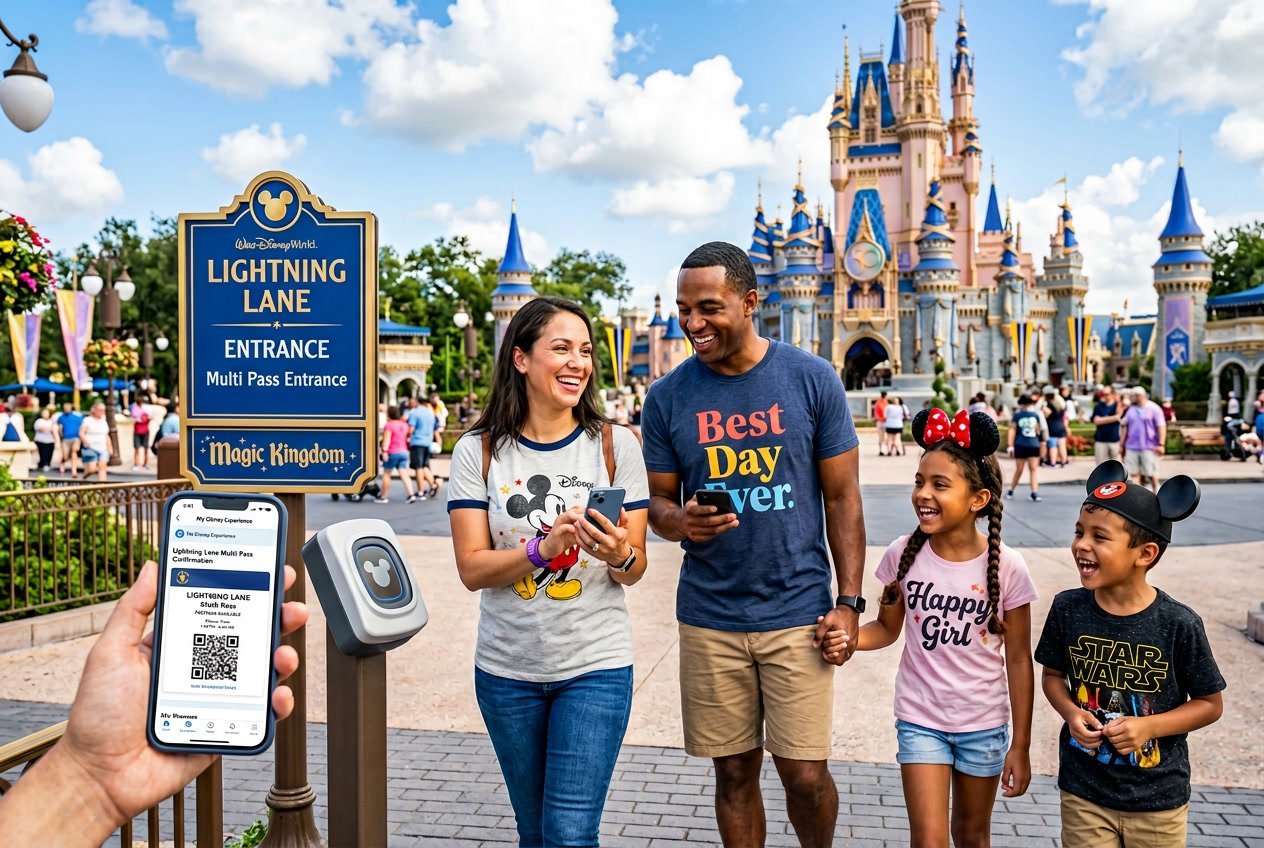
With a little strategy, you can skip the worst lines and squeeze in way more magic. Here are some real-world tips to help you outsmart the crowds and actually enjoy your day.
Lightning Lane and Genie+ Secrets
Lightning Lane Multi Pass has replaced the old FastPass at Disneyland and Walt Disney World. At Disneyland, you can book your first Lightning Lane at 7 AM the day you visit. Disney World lets resort guests book seven days out, and off-site guests get a three-day window.
Book the most popular rides first. At Disneyland, that’s Rise of the Resistance, Radiator Springs Racers, and Matterhorn Bobsleds. For Magic Kingdom, go for Seven Dwarfs Mine Train and TRON Lightcycle Run right away.
Lightning Lane Premier Pass is the most expensive option, but it lets you skip regular Lightning Lane lines for each included ride. It’s only really worth it on the busiest days, or if you just don’t want to wait—hey, no judgment.
Some Lightning Lane pro tips:
- Book your next Lightning Lane as soon as you tap into your current ride.
- If you’re arriving late, stack Lightning Lanes for the afternoon.
- Keep refreshing the app—sometimes better return times pop up as others change their plans.
- Single Pass rides like Rise of the Resistance need a separate purchase.
Rope Drop, Single Rider, and Rider Switch Tricks
Rope drop is just showing up before official opening time. They’ll usually let you in 30-60 minutes early to hang out on Main Street or Buena Vista Street. When the park opens, you can walk onto the big rides with almost no wait.
Single rider lines are a hidden gem. At Universal Orlando, use them for Harry Potter and the Escape from Gringotts, Hagrid’s Motorbike Adventure, and Revenge of the Mummy. At Disneyland, check out Matterhorn Bobsleds and Millennium Falcon: Smugglers Run for single rider access.
Rider Switch is a lifesaver for families with little kids. One adult waits with the kid while the rest ride, then you swap without having to wait again. Just ask a cast member at the ride entrance to set it up in your app.
Best rope drop tips:
- Get to the gate 45-60 minutes before official opening.
- Have your tickets loaded on your phone for quick entry.
- Head straight for the most popular ride—don’t stop for photos yet.
- Save browsing the shops and smaller attractions for later in the day.
Using the Disneyland and Play Disney Parks Apps
The Disneyland app is basically your lifeline for the day. It shows real-time wait times, lets you order food before you’re even hungry, and handles your Lightning Lanes.
Check wait times before trekking across the park—nobody wants to hike for nothing.
Mobile ordering usually shaves 20-30 minutes off your wait at quick-service restaurants. Place your order in the app, and when you get the notification, that’s your cue to stroll over.
Your food’s ready when you arrive, so you skip the lines and get back to the fun faster.
The Play Disney Parks app adds interactive games to pass the time while you wait in line. At Disneyland, you’ll find trivia games in queues for Space Mountain and Peter Pan’s Flight, making those long waits feel a bit less endless.
Both apps drain your battery pretty fast. Bring a portable charger—really, you’ll need it. Low Power Mode helps, but it only goes so far.
Hidden Mickeys, Pin Trading, and Unique Experiences
Hidden Mickeys are those sneaky Mickey Mouse shapes tucked into rides and buildings. You’ll spot them in queues, murals, and even table settings—like the classic one in the Haunted Mansion’s dining room.
Pin trading is a fun extra thing to do, especially if you like a little treasure hunt vibe. Buy a starter set at any Disney store, then look for cast members with pins on their lanyards. They’ll trade one-for-one, as long as your pins are official Disney ones.
Pin trading basics:
- Buy starter pins at Main Street shops or World of Disney
- Trade only official Disney pins (no fakes or damaged ones)
- Cast members with green lanyards are the go-to for kids
- Rare or limited edition pins sometimes pop up at specialty shops
There are little-known experiences scattered around the parks. At Disneyland, try asking if you can steer the Mark Twain Riverboat from the pilothouse. Over at Universal Orlando, the app sometimes lists surprise character appearances that aren’t on the schedule. These are the moments you’ll remember most, honestly.
Top Attractions, Experiences, and Can’t-Miss Rides
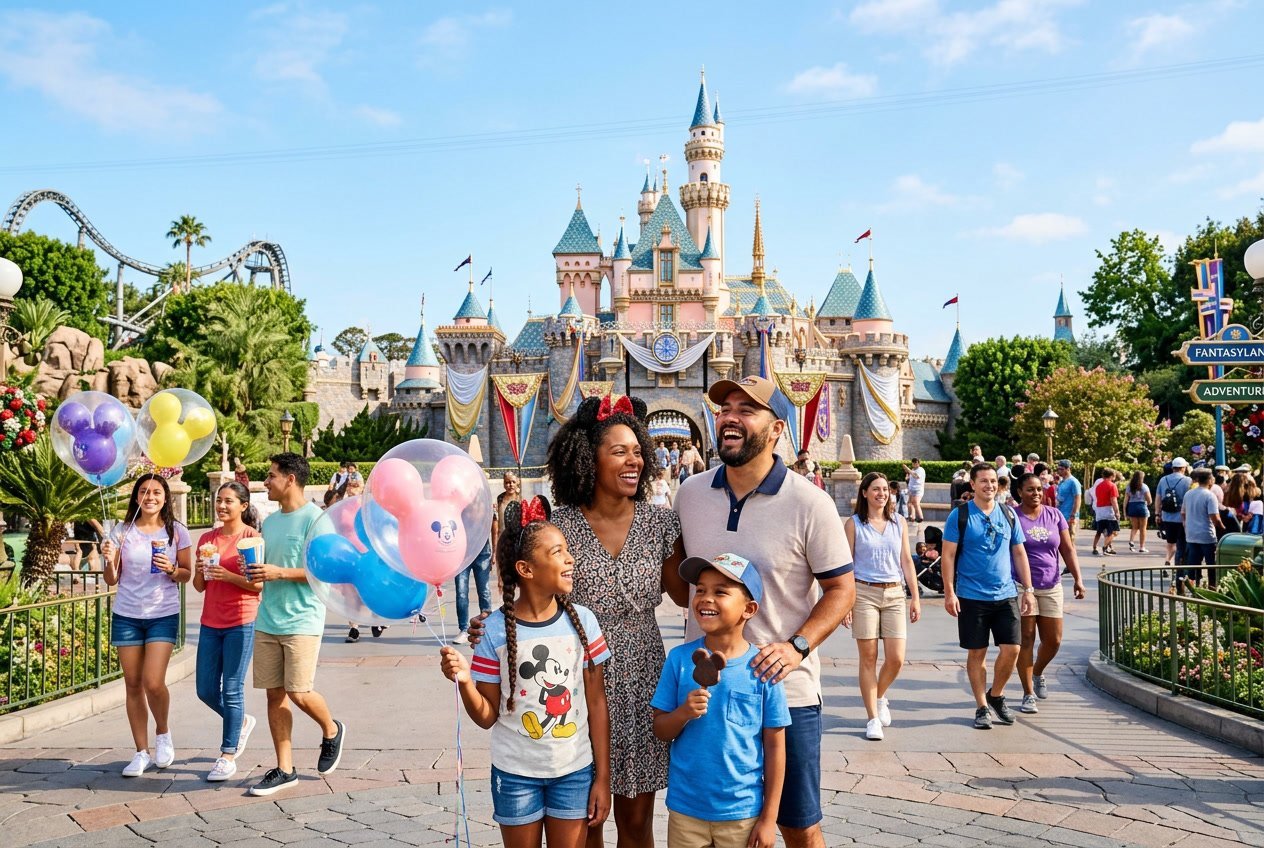
Disneyland Resort has over 60 attractions split between Disneyland Park and Disney California Adventure. That’s actually more rides than all four Walt Disney World parks combined. Picking the right ones to focus on can really make your visit.
Classic and New Must-See Attractions
Disneyland Park is loaded with the icons you’ve heard about forever. The Haunted Mansion in New Orleans Square? Still a must-do, with clever effects and scenes that stick with you.
Space Mountain delivers a pitch-black roller coaster rush, and Pirates of the Caribbean set the bar for dark rides years ago.
Tiana’s Bayou Adventure is a new spin on an old favorite, with fresh music and a different story. Matterhorn Bobsleds is unique to Disneyland—no other Disney park has this wild, icy coaster.
Star Wars: Galaxy’s Edge shook things up with Millennium Falcon: Smugglers Run, where you actually get to pilot the ship. Indiana Jones Adventure in Adventureland still wows people with its ride tech, even after all these years.
Over at Disney California Adventure, Radiator Springs Racers is probably the ride with the longest line, and yeah, it’s worth it. Great storytelling, fun race at the end. Guardians of the Galaxy – Mission: BREAKOUT! is pure chaos in the best way—crazy drops, loud music. Soarin’ Across America is calmer but gives you some incredible views.
Unique Lands and Themed Areas
Star Wars: Galaxy’s Edge drops you on the planet Batuu, and the detail is wild. Build a lightsaber, sip blue milk, and chat with characters who never break character. It really feels like you’re somewhere else.
Cars Land is basically Radiator Springs from the movies, down to the last neon sign. Walk through at night and you’ll swear you’re in the film. Even if you skip the rides, the atmosphere is worth a stroll.
Avengers Campus lets you spot Spider-Man swinging overhead and meet Marvel heroes. The WEB attraction puts you right in the action, battling spider-bots with your own (virtual) webs.
Main Street U.S.A. is your entry point, all old-school charm and nostalgia. The other lands—Adventureland, Frontierland, Fantasyland, Tomorrowland—each have their own vibe, so hopping between them never gets boring.
Nighttime Spectaculars and Parades
Fantasmic! takes over the Rivers of America with water, fire, and Mickey Mouse going full wizard. It’s a big show—pyro, projections, live actors. If you want a good spot, you’ll probably need to camp out 45 minutes or more ahead.
World of Color at Disney California Adventure is all about images projected on water, synced to music and fountains. The newer World of Color Happiness mixes in some fresh scenes but sticks to what made the original a hit.
Paint the Night Parade lights up Main Street U.S.A. with over a million LEDs and floats packed with Disney and Pixar characters. It usually runs on select nights, and you can often catch it twice if you time things right.
Fireworks at Disneyland Park are classic. They light up the sky above Sleeping Beauty Castle most nights, with projections on the castle and music you’ll probably know by heart.
Seasonal Attractions and Overlays
Haunted Mansion Holiday swaps out the usual ghosts for Nightmare Before Christmas from September to early January. There’s a new gingerbread house every year, and the overlay always draws longer lines than the regular version.
Halloween brings themed decorations, special food, and rare character sightings. Oogie Boogie Bash is a separate ticket event, but if you’re into exclusive entertainment and trick-or-treating, it’s worth considering.
The holidays are a big deal. “it’s a small world” Holiday gets decked out with music and lights, and Festival of Holidays at Disney California Adventure brings food booths celebrating different cultures. Main Street goes all-in with garlands and a massive Christmas tree.
Summer means longer hours and sometimes extra entertainment. If you want to catch a specific overlay, check the calendar and plan your trip accordingly.
Where to Stay: Best Hotels and Accommodation Strategies
Picking where to stay can make or break your trip. On-property hotels get you early entry and are super close, but off-property spots are usually cheaper and still convenient.
Official Disneyland Resort Hotels Perks
Staying at the three Disneyland Resort hotels lets you enter the parks 30 minutes before everyone else. That’s a huge perk, but only if you’re willing to get up early—think 7:30 or 8 a.m.
Disney’s Grand Californian Hotel & Spa is closest, with its own entrance to Disney California Adventure. It’s pricey—rooms start around $700 a night—but you get a spa, room service, and fancy pools with cabanas.
Disneyland Hotel is the classic, dating back to 1955. It’s got the best pool scene, plus standard rooms, club-level upgrades, and themed suites. Expect to pay $500 to $700 a night.
Pixar Place Hotel is the most affordable Disney option at about $450 a night. The rooms are Pixar-themed, and there’s a private walkway straight into Paradise Gardens at California Adventure.
Choosing Hotels Near the Parks
Harbor Boulevard hotels are right across from Disneyland’s pedestrian entrance. You can walk to the gates in under 10 minutes from most of these places.
The Fairfield Anaheim Resort goes for $200 to $250 a night or 30,000 to 59,000 Marriott points. Rooms are recently redone, and there’s a McDonald’s next door for a quick breakfast.
Courtyard Anaheim Theme Park Entrance has an on-site water park and rooms that sleep up to six, with two queens plus bunk beds. Rates range from $200 to $550 or 73,000 to 98,000 Marriott points.
Hotels along Disneyland Drive and West Katella Avenue are behind California Adventure, so you’ll walk a bit more but still stay close.
Vacation Packages and Booking Advice
Disney sometimes offers seasonal discounts of 10% to 30% off their hotels during slower times. If you spot a deal, book fast—they disappear quickly.
Renting Disney Vacation Club points can save you money on the Villas at Disneyland Hotel or Grand Californian Hotel & Spa, especially for longer trips or bigger rooms.
Travel rewards cards help offset costs. The Capital One Venture card gets you 1 cent per mile on hotels, and the Bilt Mastercard gives 1.25 cents per point if you book Disney hotels through their portal.
Weigh the total costs—sometimes early entry is worth the price, sometimes it’s not. For a lot of families, off-property hotels are the better value, especially since Disneyland is compact and nearby hotels are just as convenient as the Disney ones.
Dining, Snacks, and Character Experiences
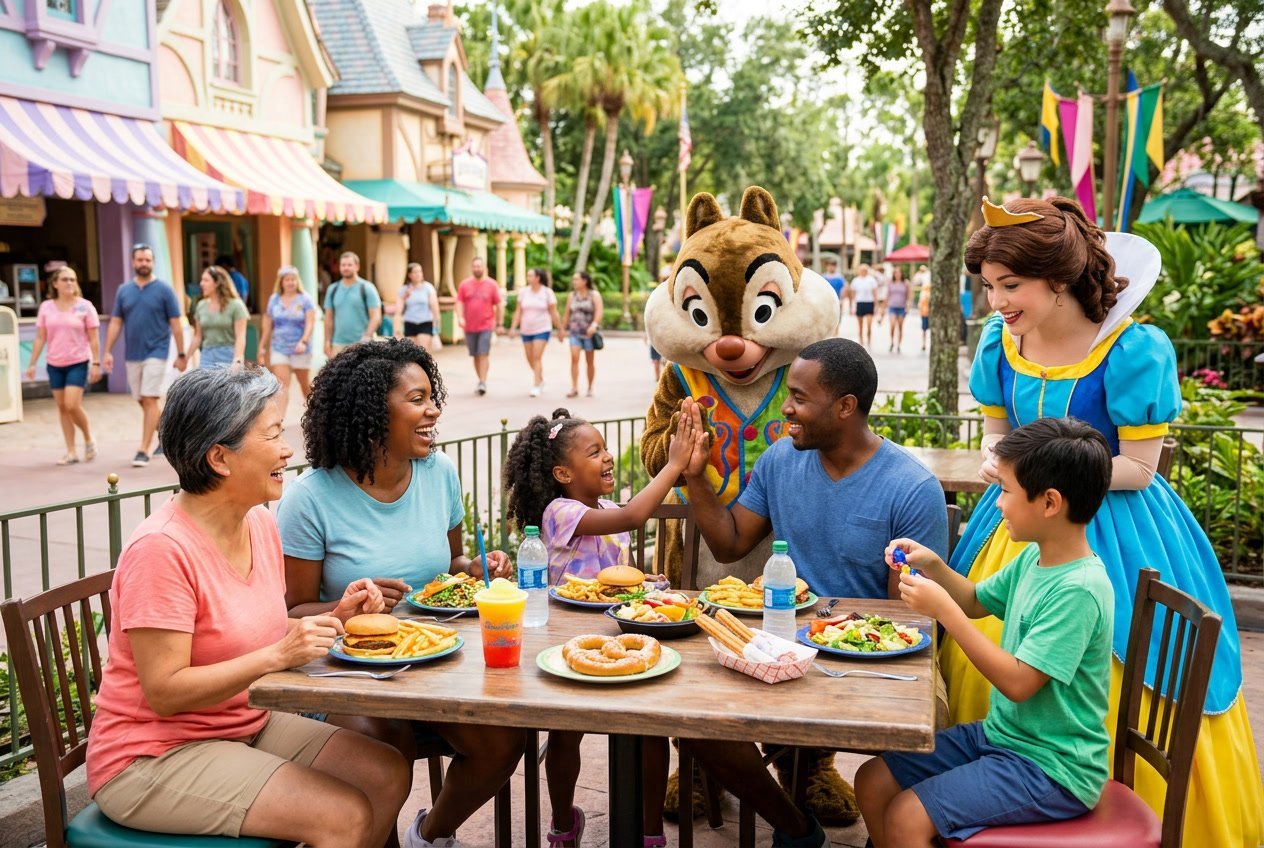
Good food choices can save you time, money, and add some magic to your day. Character meals guarantee you’ll meet your favorites, and mobile ordering means less standing around hungry.
Booking Character Dining and Signature Meals
You can reserve character dining up to 60 days out. Goofy’s Kitchen at Disneyland Hotel and Disney Princess Breakfast Adventures at Grand Californian are the most popular—they fill up fast, so don’t wait.
Plaza Inn inside Disneyland Park serves Minnie & Friends Breakfast starting at 8:00 AM. It’s a sneaky way to get early park entry and hang out with Minnie, Mickey, and other rotating characters.
Carthay Circle Restaurant in California Adventure is reservation-only and a bit fancier (no characters here). If you want the World of Color dessert party, book this spot for reserved show viewing.
Character dining costs more, but you skip the long meet-and-greet lines. Bring an autograph book and camera—you’ll want those memories.
Mobile Ordering and Dining Reservations
Mobile ordering with the Disneyland app is a game changer for skipping counter lines at quick-service restaurants. You just place your order, pay right there, and pick up your food at a set time—no need to hover awkwardly by the counter.
Try to order your food 30-60 minutes before you actually want to eat. The app will show you what pickup times are open, and it all depends on how busy the restaurant is. When your order’s ready, just stroll over to the mobile order pickup area and grab it.
Most quick-service spots—like Docking Bay 7 and Ronto Roasters in Star Wars: Galaxy’s Edge—accept mobile orders. For table-service restaurants, you’ll need reservations in advance, either through the app or the website.
Keep checking the app throughout your day for last-minute reservation openings. People cancel all the time, so you might get lucky and snag a spot at a popular place.
Snack Hacks and Iconic Disneyland Treats
Churros are about $6 and honestly, one is big enough for two people if you’re not ravenous. Churro carts are everywhere, and the flavors rotate, so you never really know what you’ll find.
The Dole Whip at Tiki Juice Bar? Legendary, but the line gets wild around midday. Go in the morning or during dinner hours for a better shot at a quick treat. If you miss it, you can also grab Dole Whip at a few spots in Disney California Adventure.
Mickey-shaped beignets from Mint Julep Bar in New Orleans Square are worth the hype—warm, soft, and absolutely buried in powdered sugar. The line looks intimidating but moves fast, so don’t be discouraged.
Honestly, packing your own snacks and refillable water bottles saves a ton. Both parks are fine with outside food and drinks. And if you want to avoid buying bottled water, just ask for free ice water at any quick-service counter.
Travel Logistics: Getting There and Park Navigation
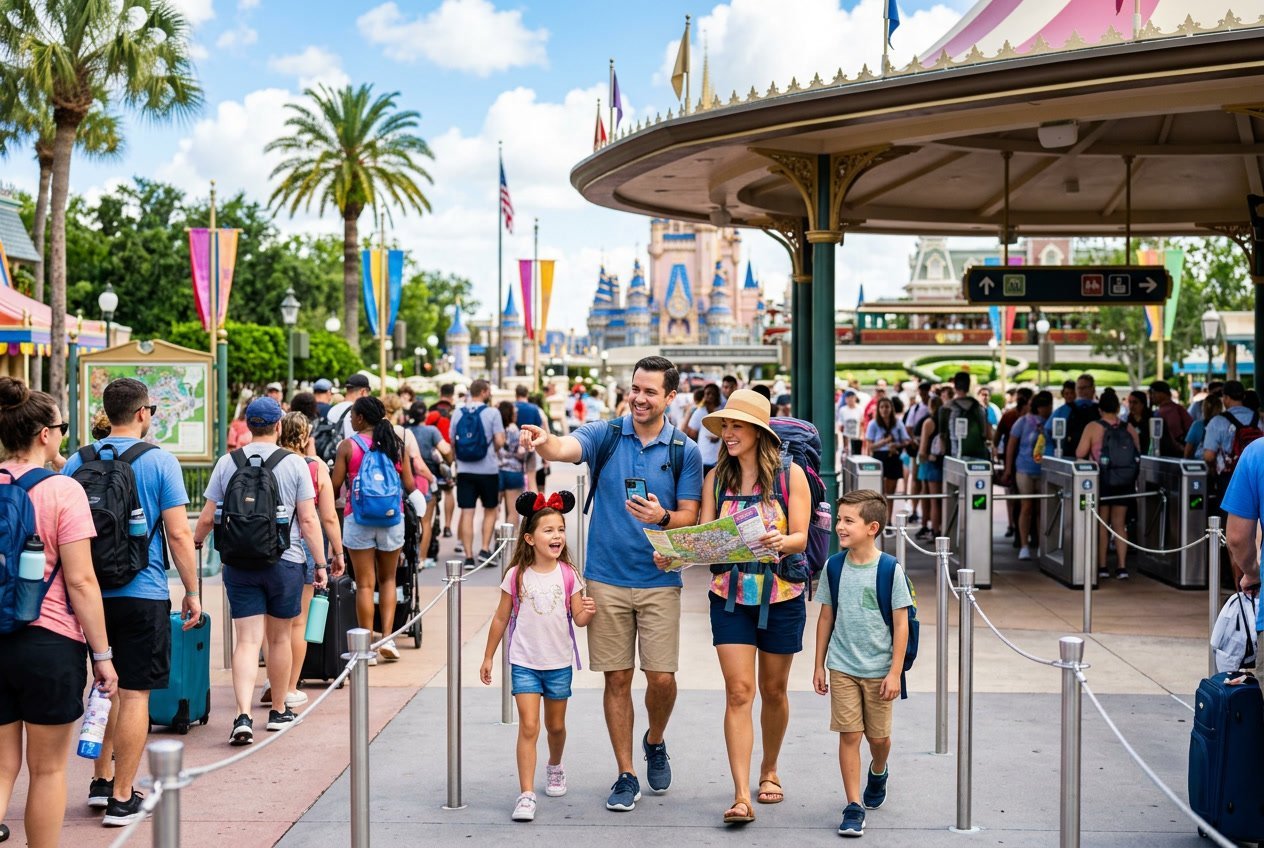
Getting to Disneyland or Universal Orlando isn’t as simple as just booking a ticket—it takes a bit of planning. You’ll need to figure out flights, ground transportation, and how you’ll handle park hopping and long days at the resort. It can get overwhelming, but it’s doable.
Flying and Transportation Options
For Disneyland in California, you’ve got three main airports. Los Angeles International (LAX) is the most popular, usually cheaper, but it’s always busy. John Wayne Airport (SNA) is closer to Disneyland and way less hectic. Long Beach Airport (LGB) is another smaller one that’s sometimes overlooked.
LAX is about 35 miles from Disneyland, so you’re looking at a shuttle, rideshare, or rental car. If you land at John Wayne, you’re only 15 miles away—so much better if you hate long drives.
For Universal Orlando in Florida, fly into Orlando International Airport (MCO). It’s about 20 miles to Universal Orlando Resort, and you’ll find plenty of rideshares, shuttles, or rental cars to get you there.
Lots of offsite hotels near both resorts offer free shuttle service to the parks. It’s worth checking with your hotel before you book other transportation.
Vacation Planning and Packing
Comfortable shoes are non-negotiable—make sure they’re broken in. You’ll walk a ridiculous amount every day. Bring a small backpack for water, snacks, chargers, and sunscreen. Trust me, you’ll use all of it.
Essential items include:
- Refillable water bottle
- Portable phone charger
- Sunscreen and hat
- Light jacket for air-conditioned spaces
- Rain poncho during wet seasons
For Universal Studios Orlando, dress in layers. Florida weather is all over the place, and athletic wear is your friend. Leave the new shoes at home unless you’re into blisters.
Download the official park apps before you go. The Disneyland app and Universal Orlando app will save you so much time—they’ve got wait times, maps, and you can make reservations on the fly.
Navigating Between Parks and Park Hopper Tips
At Disneyland Resort, Disneyland Park and Disney California Adventure are right next to each other. You can walk between them in under 10 minutes through the main entrance plaza. A park hopper ticket lets you bounce between both parks on the same day.
Universal Orlando Resort has Universal Studios Florida and Universal’s Islands of Adventure. They’re connected by the Hogwarts Express train, but you’ll need a park-to-park ticket to ride it. Walking between the parks will take you about 15-20 minutes, give or take.
Park hopper tickets cost more than single-park ones. They’re worth it if you’re only visiting for a day or two and want to do it all. For longer trips, it’s fine to skip the hopper and just focus on one park per day.
Start your day early at one park when the crowds aren’t as bad. Later, hop to the second park to catch whatever you missed or just to change up the scenery.
Insider Moves and Advanced Disneyland Tips
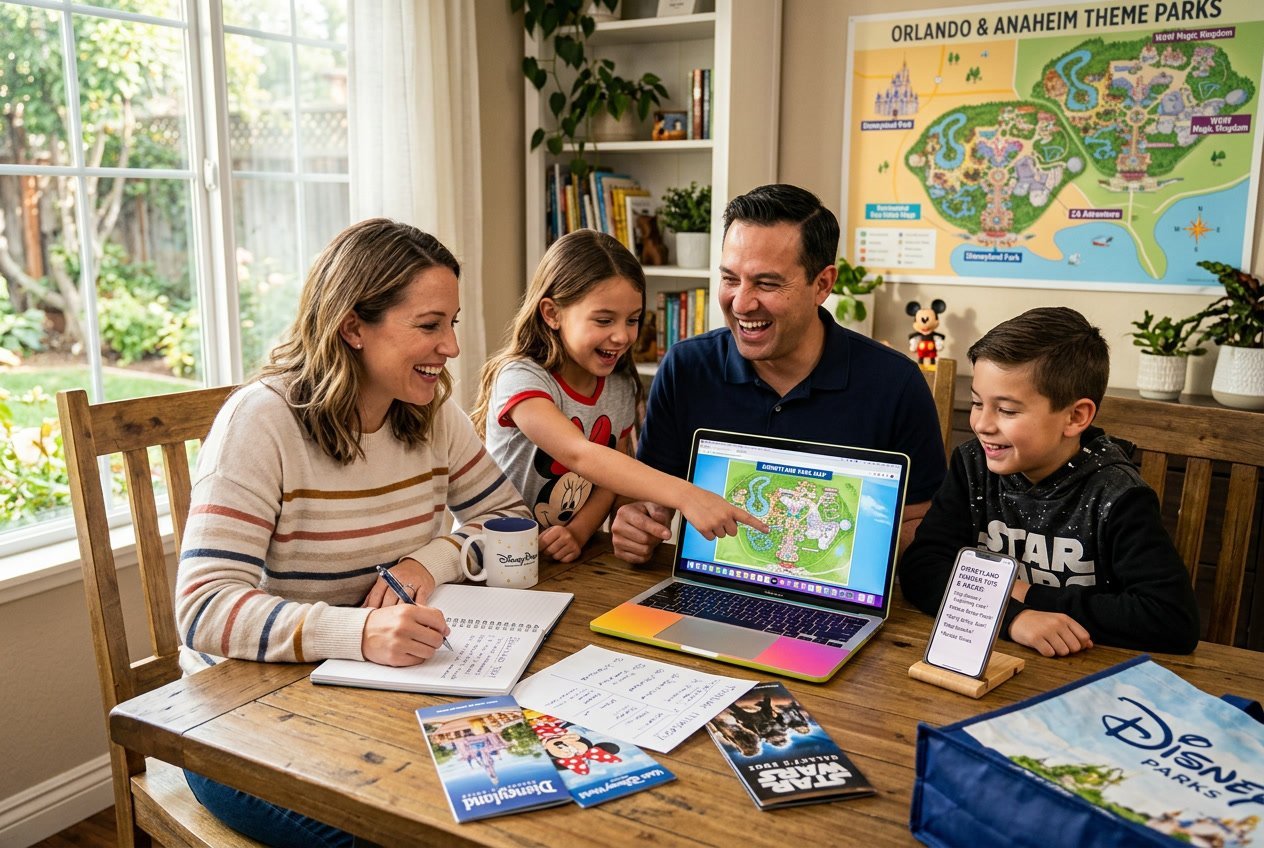
Once you’ve got the basics down, there’s a whole other level to Disneyland—stuff like pro photography, exclusive memberships, and smarter planning tools. These are the tricks that make your trip feel extra special, or just a little smoother.
Photopass, VIP, and Club 33 Information
Disney PhotoPass photographers hang out at all the big photo spots and with characters. After each picture, scan the photographer’s code into the Disneyland App and the photos are yours for 45 days. You can buy individual shots or go for Disney PhotoPass+ if you want unlimited downloads.
Private VIP tour guides are pricey—several hundred bucks per hour, with a minimum booking time. But you’ll skip regular lines and even get to cut through backstage areas. If you’ve got a group (up to 10), splitting the cost makes it a little less wild.
Club 33 is the ultimate Disneyland flex. Membership means a massive initiation fee plus annual dues, and you’ll wait years just to get an invite. If you make it in, you get access to private clubs in both parks, with fancy dining and lounges. Some areas are 21 and up only, so keep that in mind.
Souvenir Collecting and Memory-Making
Pin trading is still huge at Disneyland. Buy a Disney lanyard and starter pins in the shops, then swap with cast members or other guests. There are rules: only Disney pins, and you’re limited to two trades per cast member per day.
You can pick up free celebration buttons at City Hall on Main Street or Guest Relations in California Adventure. They’ve got buttons for birthdays, first visits, anniversaries, you name it. Cast members usually notice and will wish you well throughout the day.
Pressed penny machines are scattered all over both parks and Downtown Disney. Bring quarters and pennies for custom souvenir coins—about 50 cents each. Each machine has its own designs, so it’s fun to see what you can find.
Unofficial Tools, Guides, and External Resources
The Unofficial Guide to Disneyland digs into crowd calendars and attraction ratings, all based on a surprising amount of data crunching. You’ll find customizable itineraries and restaurant reviews that, honestly, often give you a more candid take than Disney’s own materials ever will.
Third-party apps like Thrill Data and MouseDining are out there tracking real-time wait times. They’ll even ping you when a hard-to-get dining reservation pops up.
These apps pull info from all over, so their predictions can feel a bit more on-point than what you get in the official app. Sometimes it’s almost uncanny.
Online communities and forums are where people swap the latest on ride closures, menu updates, and just general park weirdness. Folks post photos, trip reports, even shots of construction walls or whatever new churro flavor just dropped.
Honestly, these resources can save your day. Why rely on some old guidebook when you can see what’s actually happening right now?