Fun Things to Do in NYC: Travel Tips, Itineraries, and Bucket List
New York City offers endless activities for every type of traveler. From famous landmarks like the Statue of Liberty to hidden local spots in diverse neighborhoods, you can fill weeks exploring this massive city. Whether you’re planning your first visit or looking for new experiences, NYC has something to discover around every corner.
This guide covers the best things to do in NYC, from iconic attractions and world-class museums to great food spots and amazing city views. You’ll find practical advice for planning your trip and tips for making the most of your time in the five boroughs. The city’s mix of culture, entertainment, and history creates countless options for building your perfect itinerary.
Getting around NYC and choosing what to see can feel overwhelming at first. This article breaks down the top experiences by category so you can plan based on your interests and time. You’ll learn about must-visit landmarks, unique neighborhoods worth exploring, and local favorites that make New York City special.
Key Takeaways
- NYC offers iconic landmarks, world-class museums, diverse neighborhoods, and endless dining and entertainment options for all visitors
- Planning your trip by grouping nearby attractions and experiences helps you see more without wasting time traveling across the city
- The best NYC itinerary mixes famous tourist spots with local neighborhood experiences to get a complete picture of the city
Essential New York Trip Planning Advice
Planning a New York City trip requires smart decisions about timing, transportation, and budgets. Understanding the layout of the five boroughs and how to move between them will help you maximize your time and money.
Best Time to Visit New York City
Spring (April to June) and fall (September to November) offer the most comfortable weather for exploring the city. Temperatures range from 50 to 70 degrees, making it ideal for walking tours and outdoor activities.
Summer brings hot, humid days with temperatures in the 80s and 90s. You’ll find more crowds and higher hotel prices during this peak season. Winter (December to March) can be cold and snowy, but December offers spectacular holiday displays and decorations throughout the city.
Visit during weekdays rather than weekends to avoid the largest crowds at major attractions. January through March typically has the lowest hotel rates, though you’ll need to pack warm clothes. September and October provide a sweet spot with pleasant weather and fewer tourists than summer months.
Navigating the Five Boroughs
New York City consists of five distinct boroughs: Manhattan, Brooklyn, Queens, The Bronx, and Staten Island. Manhattan is the smallest but most densely packed with famous landmarks and attractions on your NYC bucket list.
Brooklyn offers neighborhoods like Williamsburg and DUMBO with great views of the Manhattan skyline. Queens is the most diverse borough with authentic international food and affordable accommodations. The Bronx is home to Yankee Stadium and the Bronx Zoo. Staten Island provides free ferry rides with excellent harbor views.
Manhattan uses a grid system above 14th Street. Avenues run north-south while streets run east-west. Fifth Avenue divides the east and west sides. Below 14th Street, streets become more irregular and harder to navigate without a map.
Transportation Tips and Getting Around
The subway system is your most efficient and affordable transportation option. A single ride costs $2.90, and the system operates 24 hours a day. Purchase a MetroCard at any station for easy access to both subways and buses.
Walking is often faster than driving in Manhattan due to heavy traffic. Download the MYmta app or Google Maps for real-time subway directions and service updates. Taxis and rideshare services work well for late-night trips or when carrying luggage.
Avoid renting a car unless you plan to leave the city. Parking is expensive and difficult to find. The subway reaches most major attractions across all five boroughs, making it unnecessary to drive.
Money-Saving Passes and Tickets
The New York CityPASS covers admission to six major attractions including the Empire State Building and the Metropolitan Museum of Art. You’ll save about 40% compared to buying individual tickets. The pass is valid for nine consecutive days.
The New York Pass offers access to over 100 attractions with options for 1, 2, 3, 4, 5, 7, or 10-day passes. This works best if you plan to visit many sites each day.
Purchase Broadway tickets at TKTS booths in Times Square or Lincoln Center for same-day discounts up to 50% off. Many museums offer “pay what you wish” hours or free admission days. Book popular attractions like the Statue of Liberty several weeks in advance to secure your preferred time slot.
Must-See NYC Landmarks and Attractions
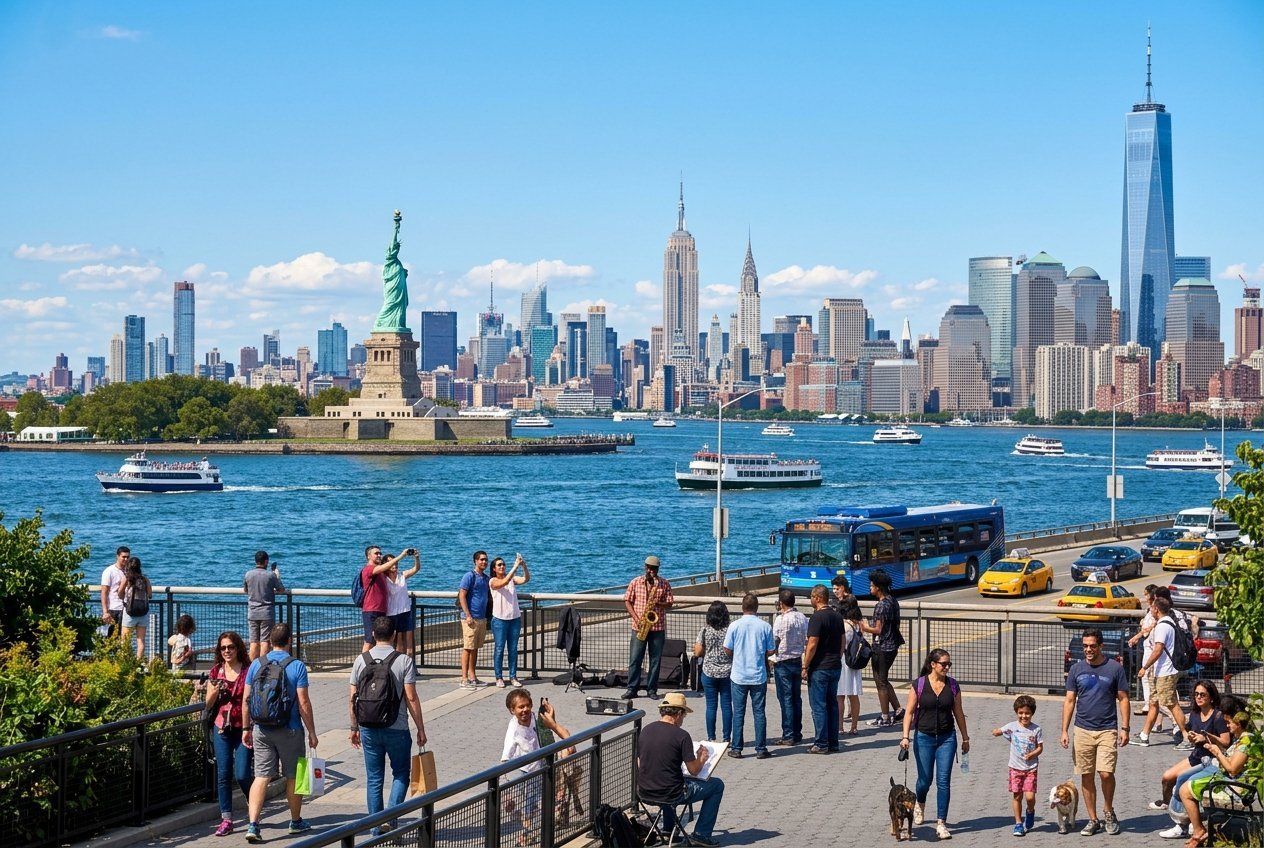
New York City’s most famous landmarks define the Manhattan skyline and draw millions of visitors each year. These iconic sites range from historic monuments that tell America’s immigration story to modern observation decks offering sweeping views of the five boroughs.
Statue of Liberty and Ellis Island
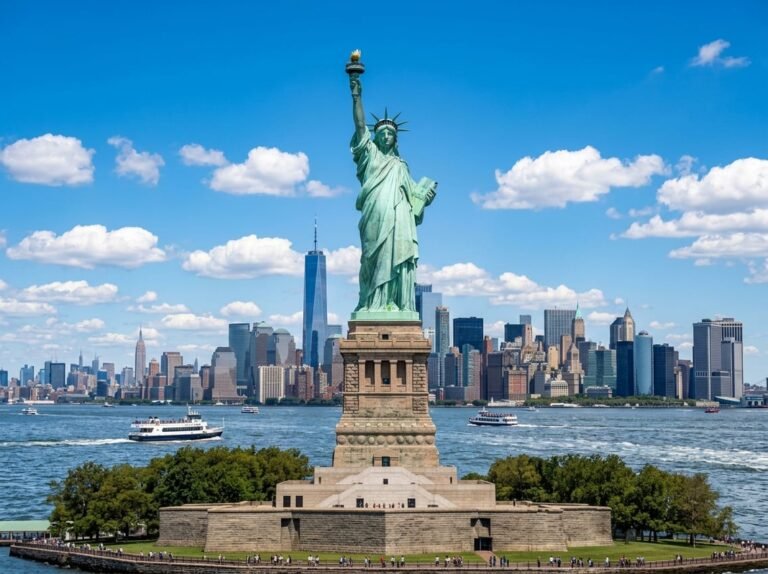
You can reach the Statue of Liberty by taking a ferry from Battery Park at the southern tip of Manhattan. The ferry ticket includes access to both Liberty Island and Ellis Island, where over 12 million immigrants entered the United States between 1892 and 1954.
Book your tickets weeks in advance if you want to climb into the crown. Only 240 people can access the crown each day. The pedestal offers excellent views without the long climb.
Ellis Island’s Immigration Museum shows the history of American immigration through exhibits and records. You can search for your own ancestors in the museum’s database. Plan at least 4-5 hours for the full experience of both islands.
The ferry departs every 30-45 minutes during peak season. Your ticket includes the round-trip boat ride and admission to both monuments.
Empire State Building and Midtown Icons
The Empire State Building’s 86th-floor observation deck sits 1,050 feet above the streets. You get 360-degree views of the Manhattan skyline from this outdoor platform. The 102nd floor adds another 200 feet of height with floor-to-ceiling windows.
Buy tickets online to skip the longest lines. Sunrise and sunset draw the biggest crowds. Late evening visits after 10 PM often cost less and offer quieter viewing conditions.
Top of the Rock at Rockefeller Center provides equally stunning views from a different vantage point. Many visitors prefer this observation deck because it includes the Empire State Building in your photos. The three-level deck design means fewer obstructed views.
Rockefeller Center itself deserves exploration beyond the observation deck. The plaza hosts the famous Christmas tree each winter and becomes an ice skating rink from October through April.
Times Square and Broadway District
Times Square lights up with digital billboards covering every available surface. You’ll find this intersection where Broadway crosses Seventh Avenue at 42nd Street.
The red bleachers in the pedestrian plaza offer a place to sit and watch the crowds. Street performers, costume characters, and tourists fill the area at all hours. Times Square earned the nickname “The Crossroads of the World” for good reason.
Broadway theaters cluster around Times Square, offering over 40 professional venues. You can get discount tickets at the TKTS booth in Duffy Square for same-day performances. The booth opens at 3 PM for evening shows and 10 AM for matinees.
Most Broadway shows run Tuesday through Sunday. Wednesday and Saturday usually include matinee performances. Ticket prices vary widely based on the show, seat location, and demand.
One World Trade Center and the 9/11 Memorial
One World Trade Center stands 1,776 feet tall at the World Trade Center site. The number represents the year of American independence. The observation deck called One World Observatory occupies floors 100-102.
The 9/11 Memorial features twin reflecting pools set in the footprints of the original towers. Bronze panels around each pool list the names of every person who died in the 2001 attacks and the 1993 bombing. The memorial is free to visit and open daily.
The 9/11 Memorial Museum requires timed entry tickets. Inside, you’ll see artifacts, photographs, and personal stories from that day. The museum sits below ground at the original World Trade Center foundation level.
The Oculus transportation hub next to the memorial offers striking white architecture and upscale shopping. This building connects multiple subway lines and the PATH train to New Jersey.
Unforgettable Parks and Outdoor Experiences
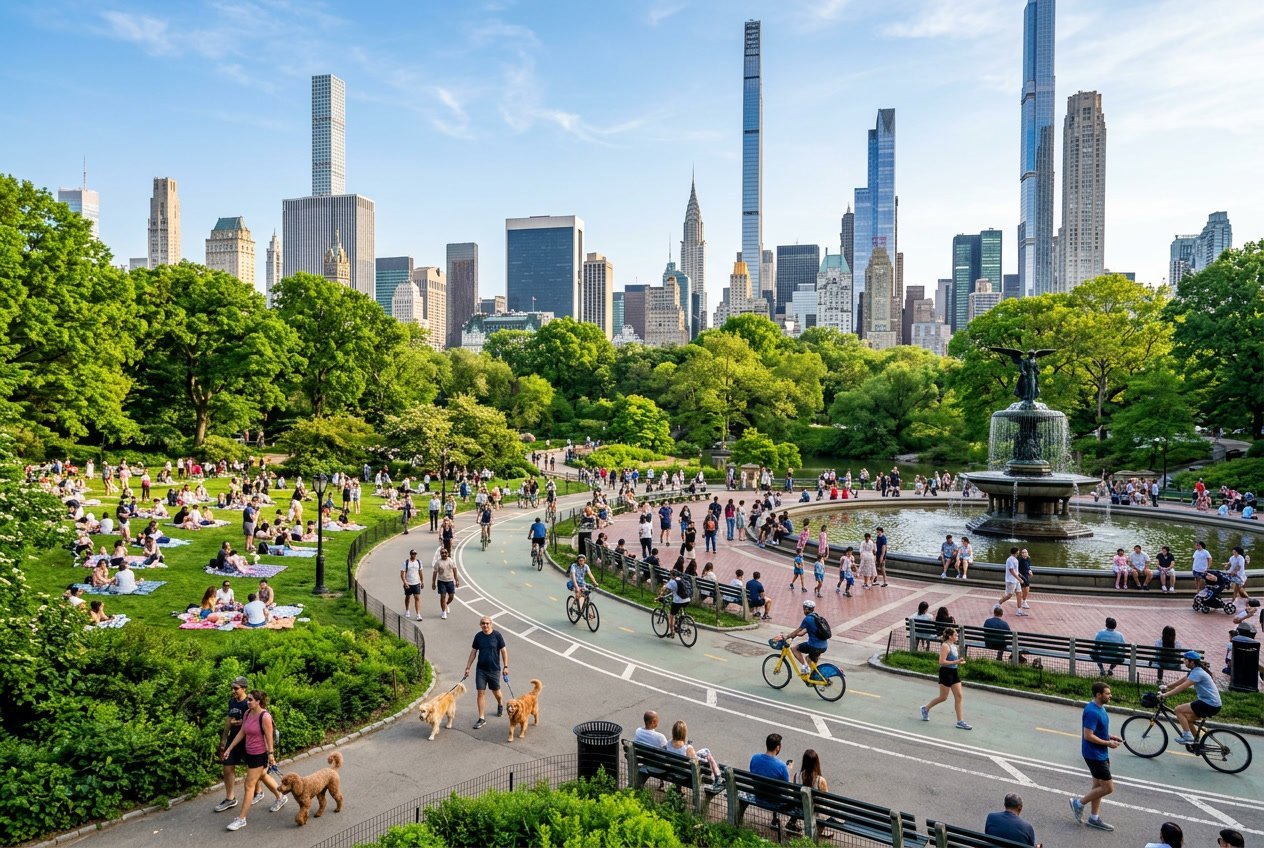
New York City’s parks offer everything from peaceful meadows and historic bridges to elevated green spaces with stunning views. You’ll find world-class outdoor attractions that blend nature with urban architecture.
Central Park Highlights
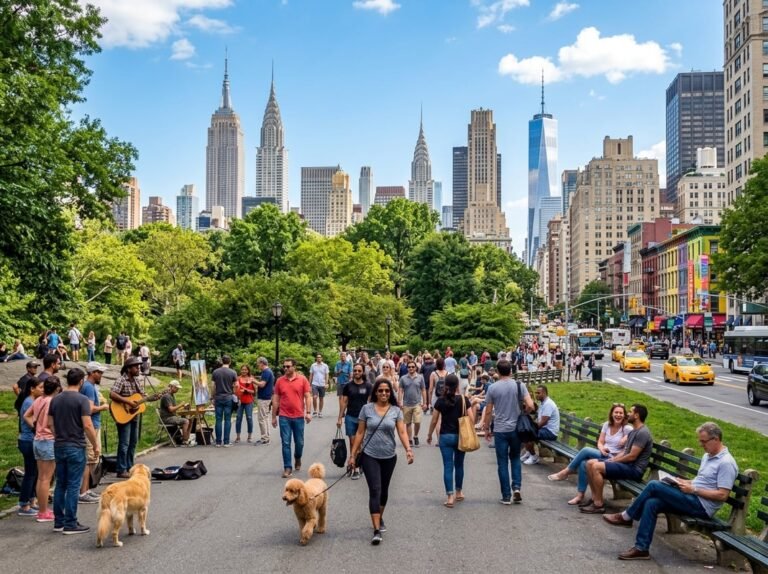
Central Park spans 843 acres in the heart of Manhattan. You can explore sprawling lawns, woodlands, lakes, and numerous landmarks within this massive green space.
Bethesda Terrace sits at the heart of the park and features beautiful architecture and a stunning fountain. Bow Bridge provides one of the most romantic views in the city, stretching gracefully over the lake. Belvedere Castle offers panoramic views from its towers, and you can spot birds from this former weather station.
Sheep Meadow and the Great Lawn give you wide-open spaces for picnics and sunbathing. Strawberry Fields honors John Lennon with its famous “Imagine” mosaic. The Central Park Zoo houses polar bears, snow leopards, and sea lions in the middle of Manhattan.
You can walk the entire park loop in about three hours or bike it faster. Tavern on the Green provides dining right in the park. The park borders Museum Mile on Fifth Avenue, where you can visit several major museums.
The High Line and Little Island
The High Line transformed an abandoned 1.45-mile elevated railway into one of the city’s most unique parks. You’ll walk above street level through Chelsea to Hudson Yards, passing wildflowers, greenery, and outdoor art installations. The elevated park opened in 2009 and gives you striking views of Manhattan’s skyline and architecture.
Little Island floats off Manhattan’s west side as a newer addition to the city’s parks. This park opens at 6am daily and features open lawns, colorful shrubs, trees, and a secret garden. You’ll find affordable food and drink options from Union Square Events.
The Glade and The Amph amphitheaters offer Hudson River views and host free events throughout summer. Both parks work well together for a single outdoor adventure along the west side.
Brooklyn Bridge and Waterfront Parks
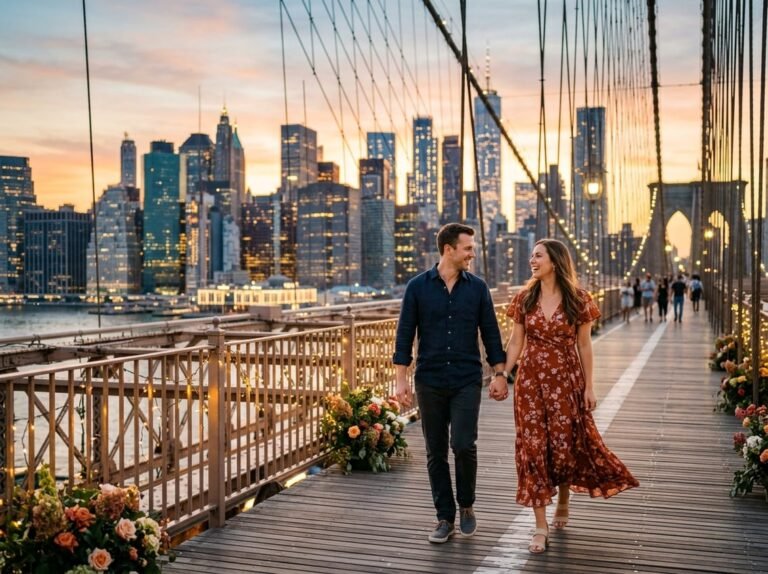
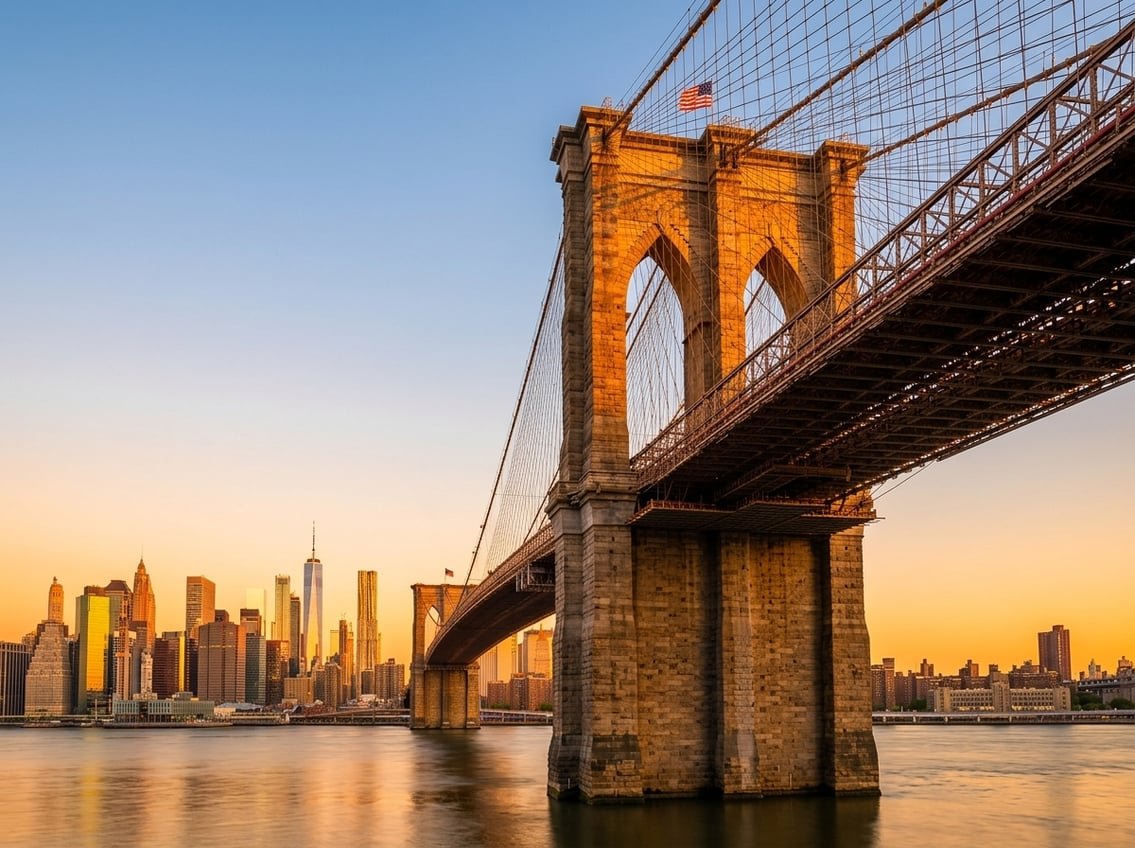
Brooklyn Bridge connects Manhattan to Brooklyn and gives you one of the city’s most iconic walks. The bridge opened in 1883 and spans 1.1 miles across the East River. You’ll get views of the Statue of Liberty, lower Manhattan, and the waterfront as you cross.
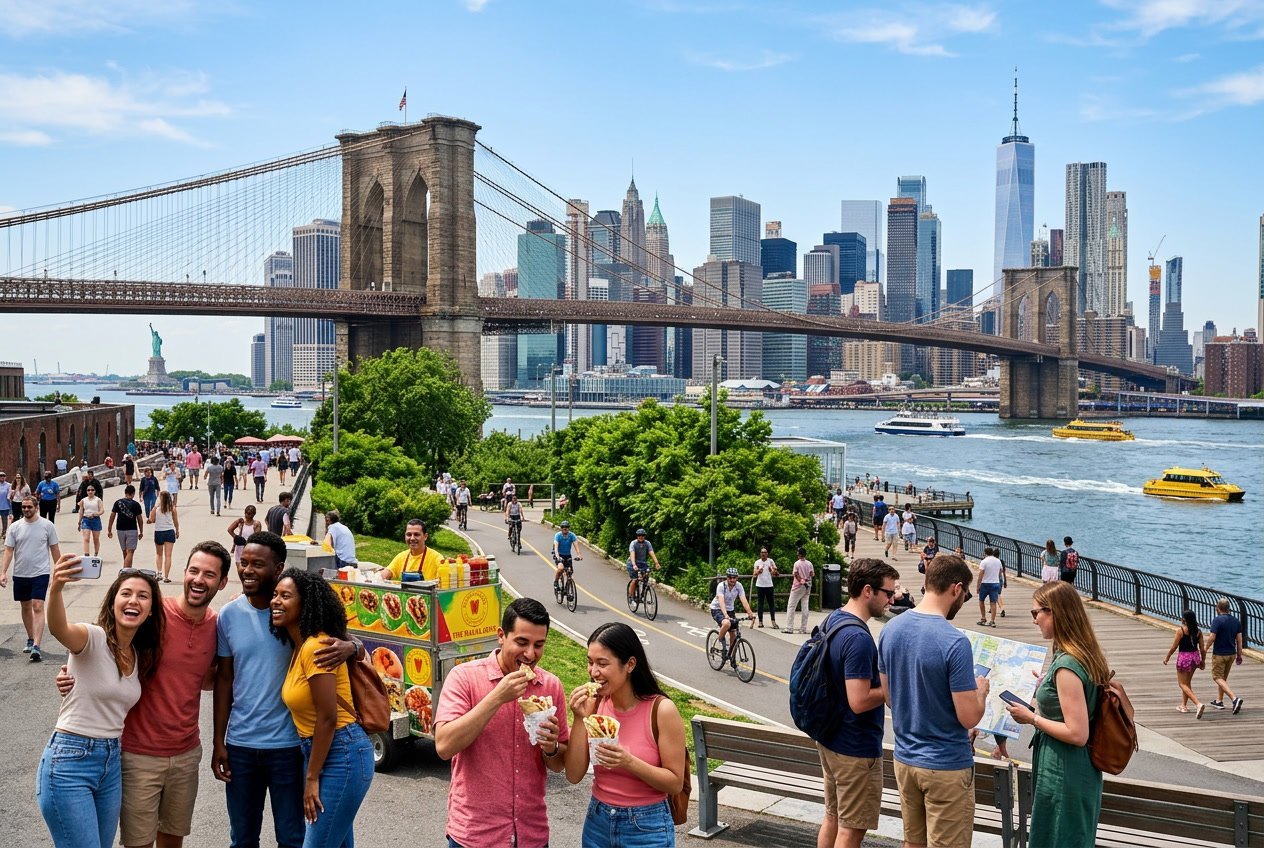
DUMBO sits at the Brooklyn end of the bridge, with cobblestone streets and waterfront views. Brooklyn Bridge Park stretches along 1.3 miles of shoreline below the bridge. You can find sports fields, playgrounds, piers, and green spaces with Manhattan skyline views.
Prospect Park in Brooklyn covers 526 acres and was designed by the same architects who created Central Park. The park includes a lake, forests, meadows, and multiple recreational areas.
Other Iconic City Parks
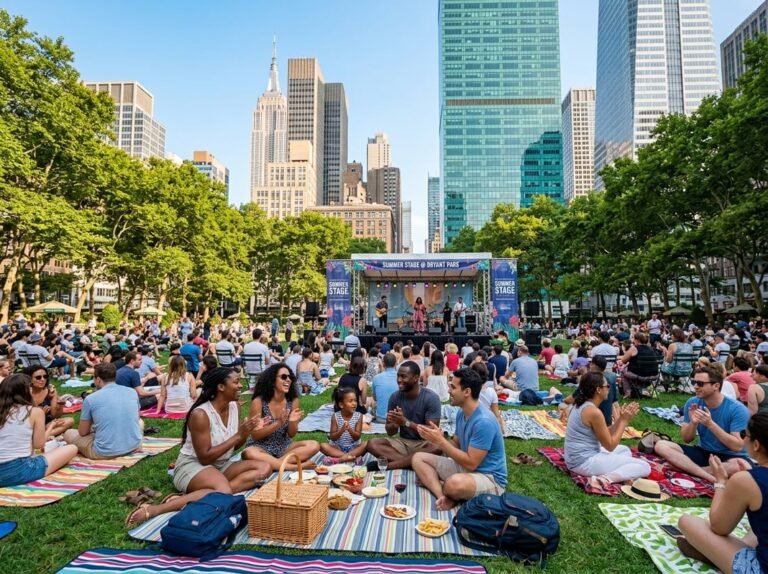
Bryant Park sits behind the New York Public Library in Midtown Manhattan. You’ll find a large lawn, seasonal activities, and free events like outdoor movies in summer and ice skating in winter. The park includes cafes and plenty of seating.
Washington Square Park anchors Greenwich Village with its famous arch and central fountain. Musicians, performers, and chess players fill this park daily. The surrounding area features historic townhouses and New York University buildings.
Both parks offer quick green escapes in busy neighborhoods. They host regular events, outdoor dining, and people-watching opportunities throughout the year.
NYC’s World-Class Museums and Cultural Spots
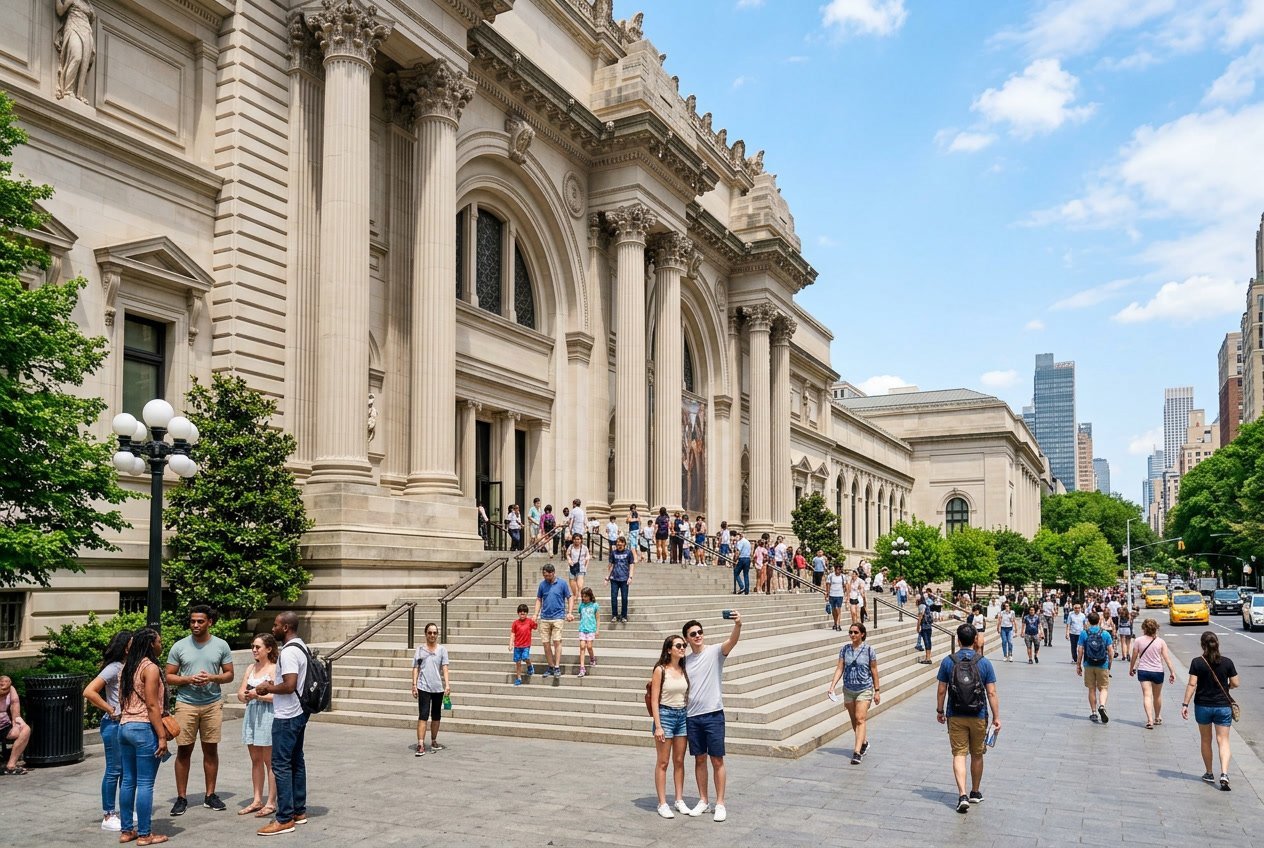
New York City holds some of the world’s finest museums, with collections spanning 5,000 years of human history and creativity. From ancient Egyptian temples to cutting-edge contemporary art, these institutions offer something for every interest and age group.
The Metropolitan Museum of Art
The Metropolitan Museum of Art stands as one of the largest art museums in the world. You’ll find over two million objects spanning 5,000 years of art history under one roof.
The museum opened in 1880 along Central Park’s eastern edge. Its collection includes everything from prehistoric artifacts to contemporary installations. You can explore the Ancient Egyptian Temple of Dendur, walk through period rooms showing how people lived throughout history, and view masterpieces by Old Master painters.
- Address: 1000 Fifth Avenue at 82nd Street
- Cost: $30 for adults, $22 for seniors, $17 for students, free for children under 12
- Tip: New York State residents can pay what they wish
You won’t see everything in one visit. The museum is simply too large. Pick a few galleries that interest you most and plan to return another time.
Museum of Modern Art and MoMA PS1
The Museum of Modern Art covers 708,000 square feet of modern and contemporary art. You’ll see famous works by Picasso, Matisse, and Pollock alongside pieces by emerging artists. The museum focuses heavily on women artists and artists of color.
The galleries are organized by time period. This lets you walk through modern art’s evolution from the late 1800s to today. You’ll find paintings, sculptures, films, and design objects throughout the building.
- Adults: $30
- Seniors and visitors with disabilities: $22
- Students: $17
- Free for members and children under 16
MoMA PS1 in Queens serves as MoMA’s contemporary art branch. Located in a former public school, it shows experimental and cutting-edge work by international artists. The space hosts an artist studio program and the popular “Warm Up” summer concert series. Adults pay $10, while New York residents get in free.
American Museum of Natural History
The American Museum of Natural History tells the story of our planet from the Big Bang to present day. Founded in 1869, it holds millions of artifacts and specimens from around the globe.
The 94-foot-long blue whale model hangs in the ocean life hall. You can visit the Hayden Planetarium for space shows, walk through the butterfly vivarium, and see dinosaur fossils spanning multiple floors. The new Gilder Center wing adds modern architecture and interactive exhibits.
Ticket prices:
- Adults: $30
- Seniors and students: $24
- Children: $18
- New York State residents: Pay what you wish with ID
Plan for at least half a day here. The museum is massive, and you’ll want time to explore your favorite topics in depth.
Other Must-Visit Art Galleries
The Solomon R. Guggenheim Museum features Frank Lloyd Wright’s famous spiraling building from 1959. You’ll find the largest collection of Kandinsky works in the United States, plus Cubist, Surrealist, and Abstract Expressionist pieces. Adults pay $30 for admission.
The Whitney Museum of American Art sits at the foot of the High Line in the Meatpacking District. It holds 15,000 works by nearly 2,000 American artists, including the entire estate of Edward Hopper. The outdoor sculpture terraces offer Hudson River views. Admission is $30 for adults and free for visitors 25 and under.
Museum Mile along Fifth Avenue clusters several institutions within walking distance. You can visit The Jewish Museum ($15 for adults), the Museum of the City of New York (free on Wednesdays), and the New-York Historical Society ($24 for adults, pay-what-you-wish on Friday evenings).
Brooklyn Museum offers an encyclopedic collection in a Beaux-Arts building. The Egyptian, African, and Oceanic collections are particularly strong. You’ll also find Judy Chicago’s “The Dinner Party” installation in the feminist art wing. Adults pay $20, and visitors 19 and under get free admission.
Unique Neighborhoods and Local Experiences
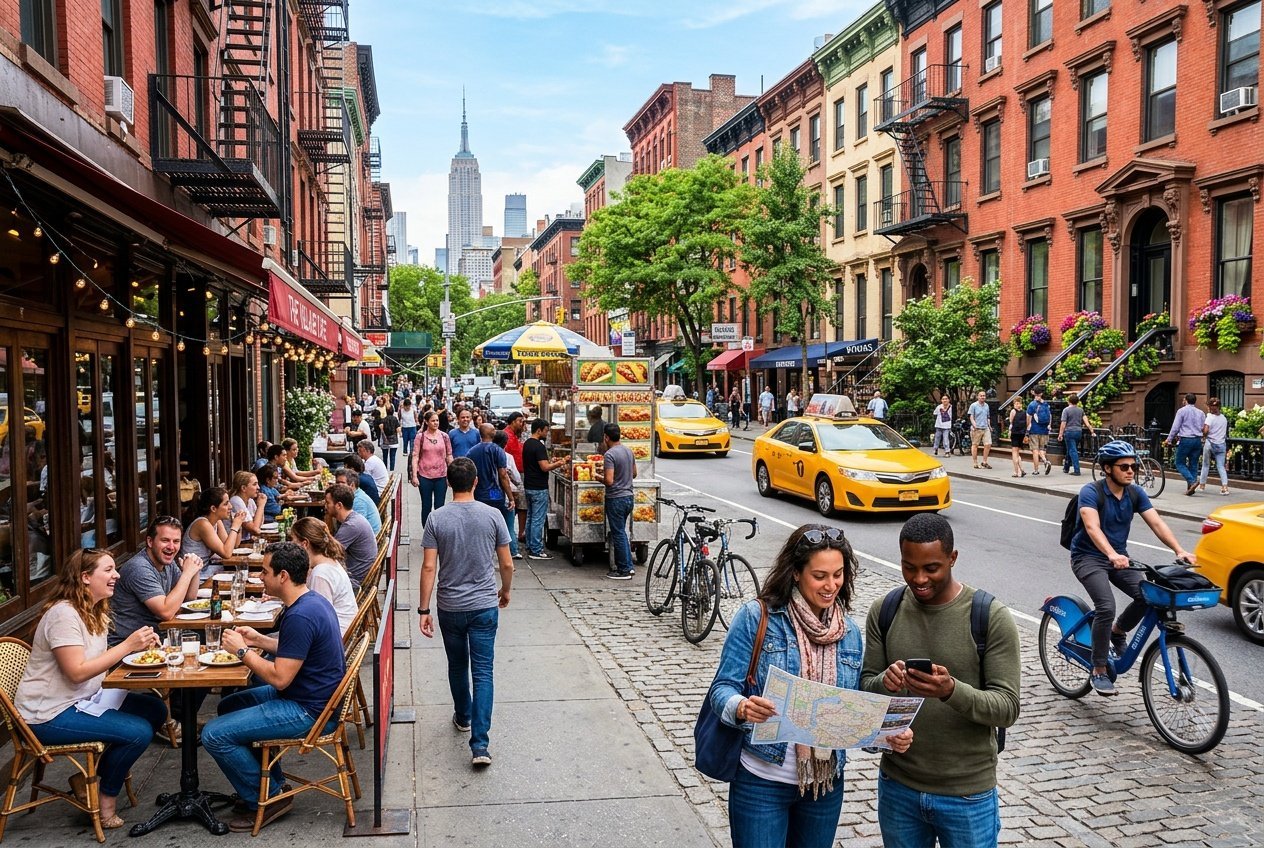
New York City’s true character emerges in its distinct neighborhoods, where local culture, food scenes, and creative communities define each area’s personality. Manhattan’s varied districts offer everything from historic streets to modern developments, while Brooklyn, the Bronx, Queens, and Staten Island each provide their own authentic New York experiences.
Exploring Manhattan’s Vibrant Districts
Midtown Manhattan serves as the city’s commercial heart, but venture beyond the office towers to find hidden gems. Chelsea and the Meatpacking District have transformed from industrial zones into cultural hubs. You can explore Chelsea Market, a food hall and shopping destination built inside a former Nabisco factory where Oreos were invented.
Greenwich Village maintains its bohemian roots with tree-lined streets, jazz clubs, and Washington Square Park. The narrow, winding streets here break from Manhattan’s grid pattern, creating an intimate neighborhood feel. Independent bookstores, cafes, and comedy clubs line the sidewalks.
Lower Manhattan blends colonial history with modern finance. You’ll find cobblestone streets in the South Street Seaport and the Financial District’s historic architecture. The Upper West Side offers a more residential experience with access to Central Park, Lincoln Center, and local markets where New Yorkers actually shop.
Hudson Yards represents Manhattan’s newest development on the Far West Side. This modern neighborhood features elevated parks, contemporary architecture, and The Vessel observation structure.
Brooklyn’s Creative Corners
Brooklyn has become synonymous with creative culture and independent businesses. DUMBO (Down Under the Manhattan Bridge Overpass) provides stunning waterfront views of Manhattan’s skyline and the Brooklyn Bridge. The neighborhood’s converted warehouses now house art galleries, tech companies, and upscale restaurants.
Williamsburg attracts artists, musicians, and food entrepreneurs. You’ll find vintage shops, craft breweries, and some of the city’s best restaurants here. The waterfront parks offer outdoor space and Manhattan views.
Park Slope features brownstone-lined streets and Prospect Park, designed by the same architects who created Central Park. The neighborhood has a strong local community with farmers markets and family-owned businesses.
Brooklyn Heights gives you historic charm with its 19th-century architecture and the Brooklyn Heights Promenade, a walkway overlooking the harbor and Lower Manhattan.
Diverse Boroughs: The Bronx, Queens, and Staten Island
The Bronx offers cultural attractions often overlooked by visitors. The Bronx Zoo is the largest metropolitan zoo in the United States, spanning 265 acres. You can also visit the New York Botanical Garden, Yankee Stadium, and Arthur Avenue’s authentic Italian restaurants and markets.
Queens is the most ethnically diverse urban area in the world. Flushing serves authentic Chinese and Korean cuisine. Astoria features Greek, Middle Eastern, and Latin American communities. Jackson Heights provides South Asian foods and shops. Long Island City has emerged as an arts district with contemporary galleries and waterfront parks.
Staten Island remains the most residential borough. The Staten Island Ferry provides free 25-minute rides with views of the Statue of Liberty and Manhattan skyline. Once there, you can visit Historic Richmond Town, a living history village, or the Snug Harbor Cultural Center with its botanical gardens and museums.
NYC Foodie Finds and Shopping Highlights
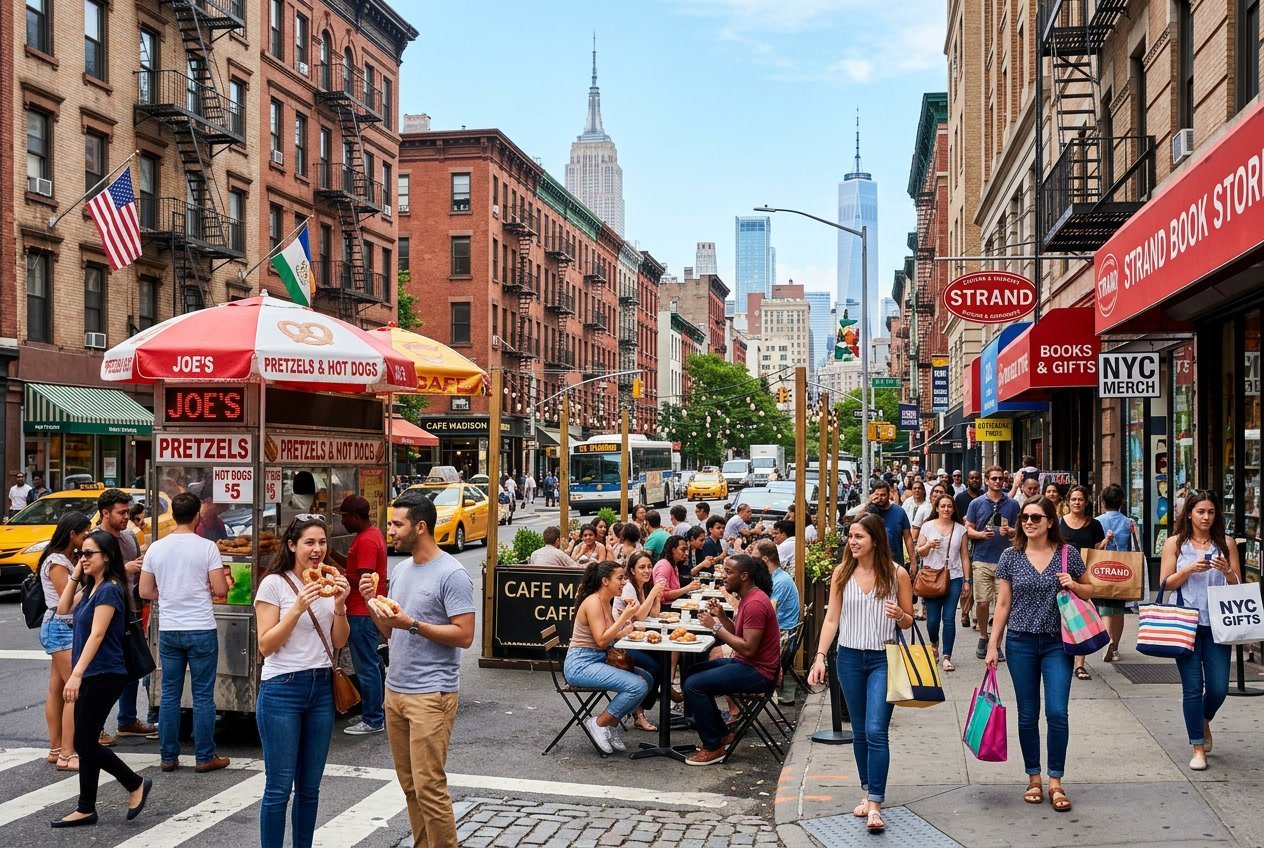
New York City serves up an unmatched combination of culinary adventures and world-class shopping experiences. From guided food tours through historic markets to luxury retail on Fifth Avenue, you’ll find both famous spots and local favorites worth adding to your NYC bucket list.
Iconic Food Tours and Markets
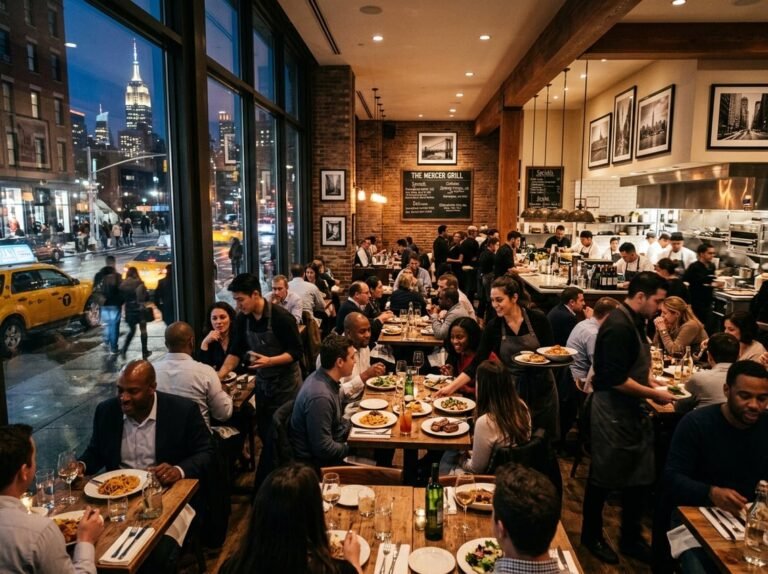
Chelsea Market stands out as one of the city’s most popular foodie destinations. This former factory building now houses over 35 vendors selling everything from fresh seafood to artisan chocolates. You can grab tacos, browse local art, and shop for specialty groceries all under one roof.
Food tours offer a smart way to sample multiple neighborhoods in a few hours. Popular options include tours through Chinatown, Little Italy, and Greenwich Village. These guided experiences typically include 5-7 food stops and teach you about the history behind each dish.
Smorgasburg operates as Brooklyn’s outdoor food market on weekends. You’ll find over 100 local vendors selling unique items like ramen burgers and rainbow bagels. The Manhattan location at the South Street Seaport offers similar variety with waterfront views.
Classic NYC Eats and Hidden Gems
Los Tacos No. 1 in Chelsea Market serves some of the city’s best tacos. The adobada and carne asada options come on fresh corn tortillas made throughout the day. Expect lines during lunch, but they move quickly.
Pizza defines New York eating culture. Lucali in Brooklyn requires hours of waiting but delivers outstanding thin-crust pies. Joe’s Pizza offers solid slices across multiple locations for quick grab-and-go meals.
Alimama makes exceptional mochi donuts and cream puffs that food lovers consistently rank as memorable. Somtum Der serves authentic Thai food that locals return to weekly. Sunny & Annie’s Deli creates the unusual pho sandwich that somehow captures soup flavors in bread form.
Shopping on Fifth Avenue and Beyond
Fifth Avenue between 49th and 60th Streets contains the highest concentration of luxury retailers in the city. Saks Fifth Avenue occupies an entire block and features designer clothing across 10 floors. Their window displays during holidays draw crowds of photographers.
Bergdorf Goodman sits directly across from the Plaza Hotel and offers high-end fashion and home goods. The seventh floor restaurant provides Central Park views while you take a shopping break.
Beyond Fifth Avenue, SoHo delivers boutique shopping on cobblestone streets. The Flatiron District around Broadway features both chains and independent stores. Brooklyn’s Williamsburg neighborhood stocks vintage clothing shops and local designer showrooms along Bedford Avenue.
Memorable Observation Decks and Epic City Views
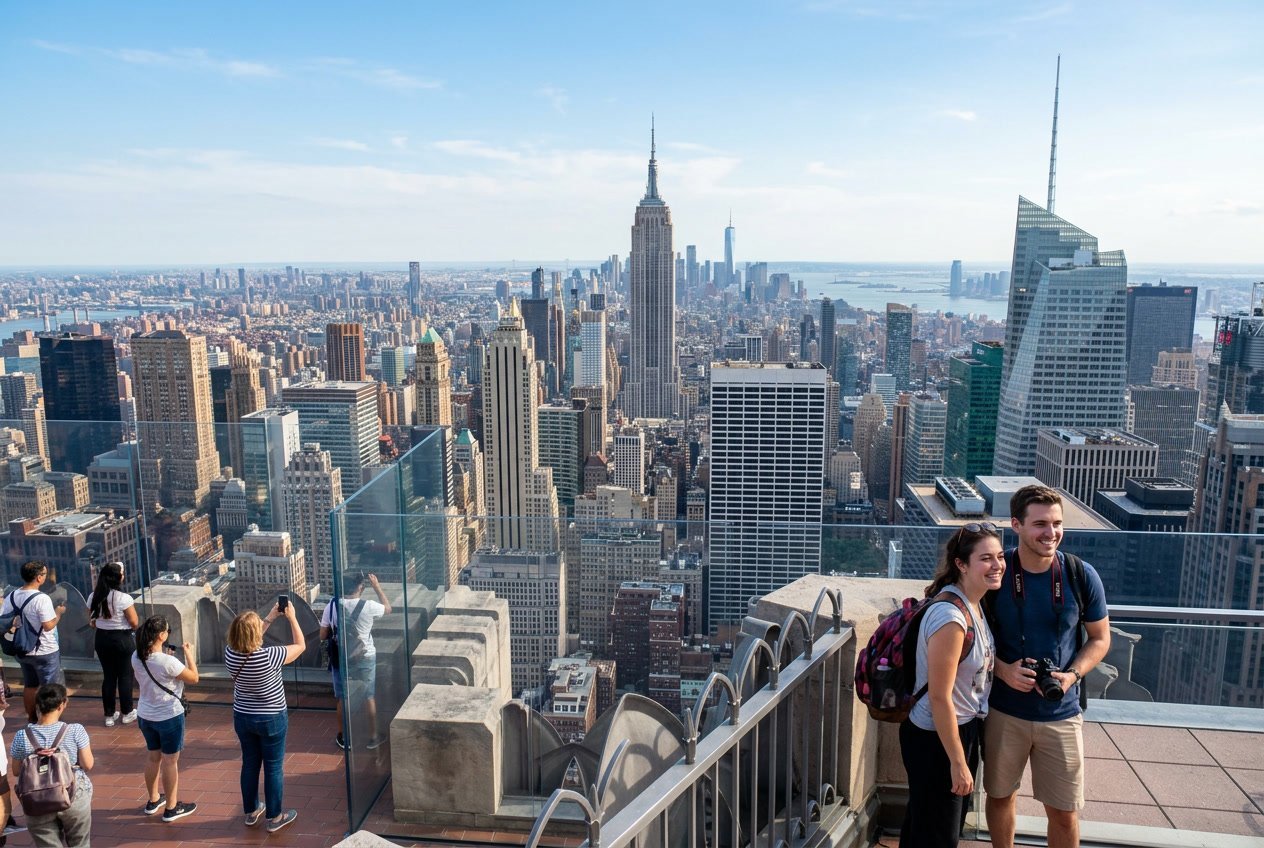
New York City’s observation decks offer some of the most stunning views you’ll find anywhere in the world. Each platform provides a unique perspective of the Manhattan skyline, from open-air terraces to floor-to-ceiling windows that put you face-to-face with the city’s most iconic buildings.
Top of the Rock
Top of the Rock at Rockefeller Center sits at 850 feet and offers what many consider the best overall views in Manhattan. You get unobstructed sightlines of the Empire State Building directly in front of you and Central Park stretching north.
The multi-level outdoor decks on floors 67-70 let you move between different vantage points. You’re positioned right in the middle of Midtown, which means you’re surrounded by skyscrapers instead of towering above them. This creates a more intimate view of the city.
For an extra experience, you can try The Beam, where you recreate the famous 1932 “Lunch Atop a Skyscraper” photo on a steel beam. The Skylift is a glass platform that rises above the top deck for 360-degree views. Book timed tickets in advance to skip the wait. Plan to spend 45 minutes to an hour here.
Summit One Vanderbilt and The Edge
Summit One Vanderbilt stands at 1,070 feet and combines observation deck views with modern art installations. The reflective floors and ceilings create endless photo opportunities. You’ll see the Empire State Building and Chrysler Building clearly, with Central Park and the Hudson River visible in the distance.
This is the most popular observation deck in New York, which means crowds. Book evening tickets if you want fewer people around. Once you leave one level, you can’t return, so take your time on each floor. Budget 1.5 to 2 hours for your visit.
The Edge at Hudson Yards rises to 1,100 feet and features the highest outdoor sky deck in the Western Hemisphere. The angled glass walls and glass floor sections give you the sensation of floating above the city. You get clear views of the Hudson River and the entire Manhattan skyline stretching before you. The outdoor platform is spacious and includes skyline seats where you can relax with a drink from the bar.
One World Observatory and The Vessel
One World Observatory reaches 1,268 feet at the top of One World Trade Center, making it the highest observation deck in New York. The entire experience is indoors across floors 100-102, which means weather won’t affect your visit.
The 47-second elevator ride features a time-lapse video showing New York’s development from the 1500s to today. At the top, you get 360-degree views of Manhattan, Brooklyn, New Jersey, and the Statue of Liberty in the distance. The location near the Hudson River at the tip of Lower Manhattan gives you a completely different perspective than the Midtown observation decks. Combine your visit with the 9/11 Memorial Museum nearby for a half-day experience.
The Vessel at Hudson Yards is a 150-foot honeycomb structure with 154 staircases and 80 landings. While much lower than traditional observation decks, it offers unique views of the Hudson Yards development and western Manhattan. The structure itself is an architectural experience worth seeing.
Inspiring NYC Shows and Nightlife
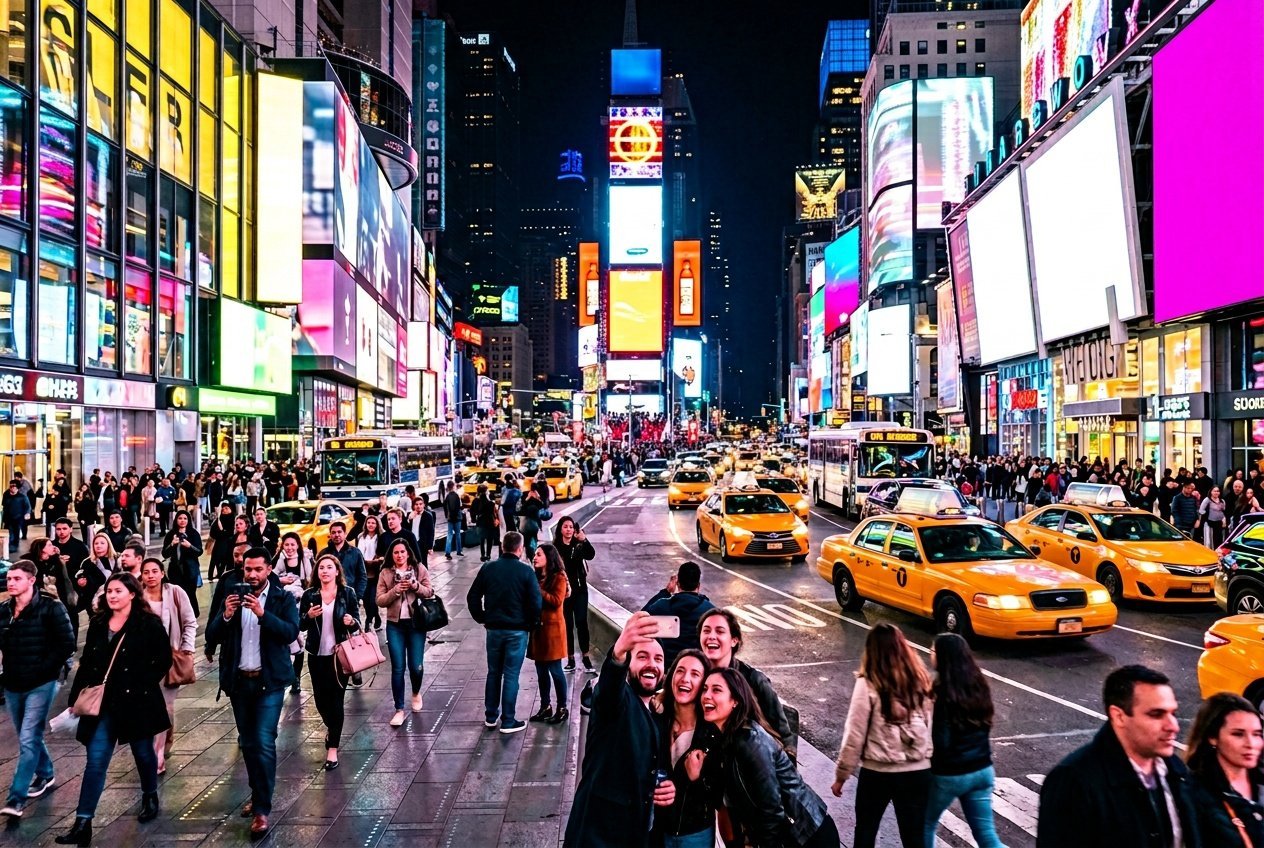
New York City offers world-class theater on Broadway and beyond, legendary music venues that host top performers, and creative nightlife spots that keep the city buzzing after dark.
Broadway and Off-Broadway Favorites
Broadway remains the gold standard for live theater. The Lion King and Wicked continue to draw huge crowds with their stunning productions and beloved stories. You can catch these shows and dozens of others in the historic Theater District around Times Square.
Off-Broadway productions give you access to innovative theater in smaller venues. Cats: The Jellicle Ball recently moved from its Off-Broadway debut at the Perelman Arts Center to Broadway, proving how these intimate productions can reshape iconic shows. Off-Broadway tickets typically cost less than their Broadway counterparts while still delivering professional performances.
The TKTS booth in Times Square sells same-day discount tickets for many shows. You’ll find booths at Father Duffy Square, South Street Seaport, and Lincoln Center. Arrive early for the best selection, especially during peak tourist seasons.
Famous Music Venues and Performance Halls
Radio City Music Hall hosts concerts, comedy shows, and the famous Rockettes performances. The Art Deco interior alone makes it worth visiting. You can book tours to see the building even when no shows are scheduled.
The Village neighborhoods contain dozens of small jazz clubs and music venues where you can hear live performances nightly. Greenwich Village, the East Village, and NoHo built New York’s reputation as a jazz capital. A new interactive walking map from Village Preservation helps you trace the historic venues and recording studios that shaped American jazz.
Carnegie Hall and Lincoln Center present classical music, opera, and ballet. These venues attract world-renowned performers and orchestras throughout the year.
Nightlife Hotspots and Unique Bars
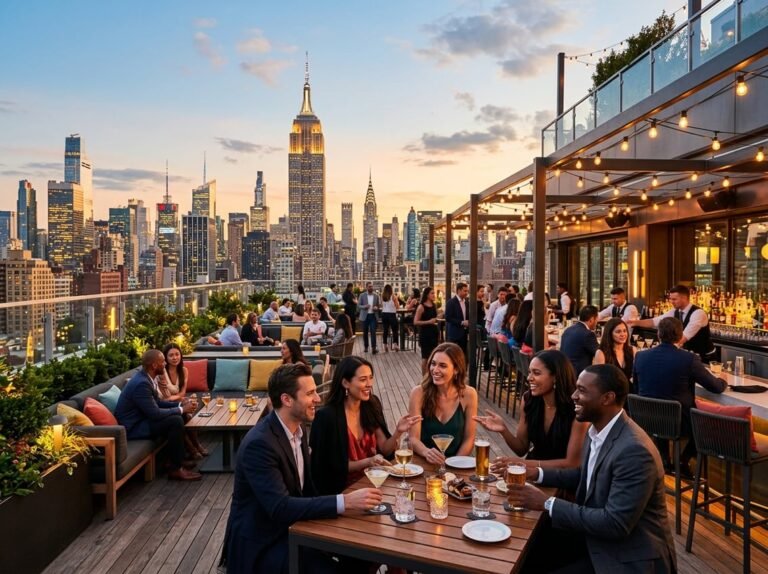
New York’s bars range from rooftop lounges with skyline views to underground speakeasies. The Rooftop Cinema Club combines drinks with movies under the stars in Midtown. You can sip cocktails while watching films through wireless headphones.
The 50th Street 1 Station area features underground spots like Nothing Really Matters for craft cocktails and Tiny Dancer for coffee and baked goods. These spaces beneath the sidewalk create a distinctive New York experience.
Time Out Market on the fifth floor brings multiple food vendors together with a rooftop stage for live performances. You get variety in one location without hopping between neighborhoods.